


Indoor or urban gardening whether you’re cultivating leafy greens, herbs, or vegetables often struggles because conventional lighting or limited sunlight fails to meet plants’ light-energy needs. A powerful, well-designed full spectrum grow lights India solution with high PPFD (Photosynthetic Photon Flux Density) can bridge that gap and make indoor farming far more productive.
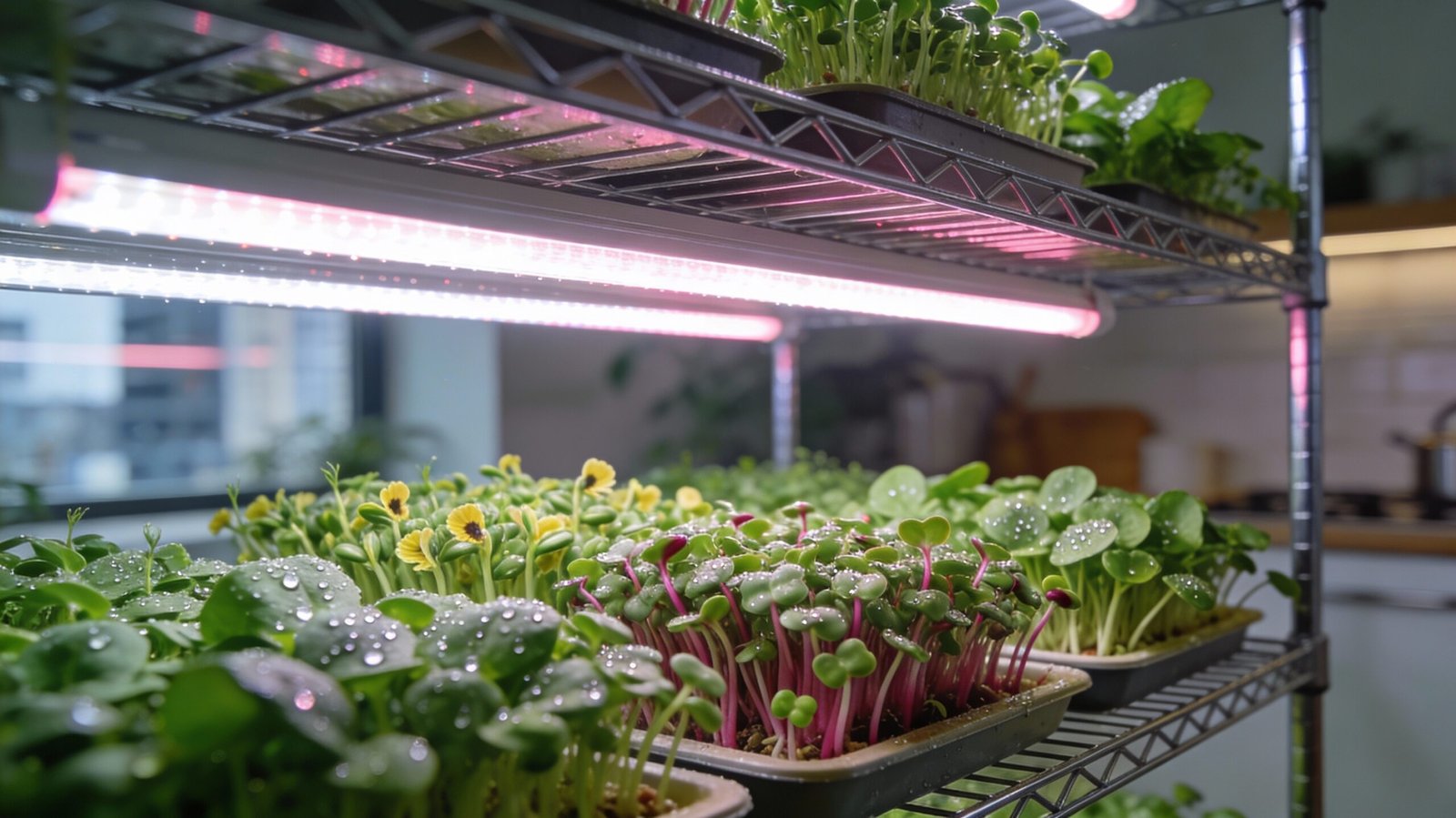
Why High-PPFD Grow Lights Are a Game Changer for Indoor Farming in India
- Plants need certain light intensity (not just any light) to efficiently photosynthesize and build biomass.
- A high-PPFD grow light ensures more usable photons reach the plant canopy meaning stronger, faster growth, denser foliage or better yields.
- For growers in India (monsoon season, cloudy winters, limited balcony light), high-intensity LEDs offer a dependable alternative so your indoor/herb garden doesn’t depend on weather or daylight hours.
In short: If you want to grow indoors especially veggies, herbs, or fruiting plants high-PPFD LED grow lights are often the backbone that determines success.
Suggested Read: Full Spectrum Grow Lights India; Best Plant Grow Lights for Home & Balcony Gardening
Understanding PPFD & Why It Matters
- What is PPFD? It stands for Photosynthetic Photon Flux Density it measures how many photosynthetically active photons hit a square metre of plant canopy every second (µmol/m²/s).
- Why PPFD is more important than wattage or lumens: Wattage or lumens measure electricity consumed or light visible to human eyes but plants rely on PAR (photosynthetically active radiation: 400–700 nm) and photon flux. A light might draw a lot of watts but produce poor PAR; or vice versa.
- Optimal PPFD ranges (general guideline):
- Leafy greens / herbs moderate PPFD (~200–400 µmol/m²/s) often suffices.
- Fruiting / high-light plants higher PPFD (e.g. 600–1000 µmol/m²/s) helps maximise yield.
- Balance is key not “more light = always better”: Excessive PPFD can stress plants. Light intensity needs to match plant type, growth stage, and environmental conditions. Reference : sansi.com Plant Folk
Therefore, high-PPFD full-spectrum LED grow lights, if correctly used, give you control over light intensity and spectrum, allowing you to tailor lighting to plant needs for best results.
Suggested Read: Indoor Grow Lights India – Best LED Grow Lights for Hydroponics & Indoor Farming
What Makes High-Power Full-Spectrum Grow Lights Ideal for Indian Indoor & Balcony Gardens
Full Spectrum = Balanced Light for All Growth Stages
Good grow lights output across the PAR range (blue through red, optionally some far-red), similar to sunlight supporting seedlings, vegetative growth, flowering/fruiting.
With a high-PPFD full-spectrum LED, you get a consistent “sunlight substitute” for your indoor plants no need to swap bulbs or change fixtures for different growth stages.
High PPFD = Faster Growth More Yield in Less Time
High-intensity light results in more photosynthesis, faster biomass accumulation, stronger stems and leaves, and, for fruiting plants, better flowering/fruit set and potentially higher yield.
For container farms or compact indoor setups, this means more output per square foot ideal when space is limited (e.g. balcony, rooftop, small shed).
Energy Efficiency & Low Heat from Modern LEDs
Modern LED grow lights convert electricity into plant-useful PAR very efficiently (e.g. 2.5–3.0 µmol/J in efficient models) meaning good output with relatively low energy cost compared to older lighting systems.
Because LEDs generate less heat than traditional lights, they’re safer for indoor use, reduce risk of heat stress on plants, and require less ventilation or cooling suitable for home or apartment settings.
Who Should Use High-PPFD Grow Lights and When
- Home growers / hobbyists wanting to grow herbs, leafy greens, or even vegetables indoors or on balconies especially when sunlight is insufficient.
- Small container farms or vertical-shelf gardens where maximizing yield per square foot is key.
- Growers of high-light demanding plants (tomatoes, peppers, fruiting herbs, flowering ornamentals) that need more intense light for optimal growth and yield.
- Hydroponic / indoor farming setups in climates or seasons where natural light is inconsistent (monsoon, winter, urban shaded apartments) full spectrum high-PPFD LEDs give control and consistency.
Practical Tips: How to Use High-PPFD Grow Lights Effectively
- Match PPFD to the plant’s need & growth stage: Don’t always go full power. For seedlings or delicate greens, start with moderate PPFD (200–400 µmol/m²/s). For fruiting or high-light crops, aim higher (600–1000 µmol/m²/s) but monitor for heat or light stress.
- Maintain proper distance between light and plants: PPFD decreases quickly with distance (inverse-square law). Adjust height to maintain desired PPFD while avoiding leaf burn.
- Ensure even light distribution: A good light should provide uniform PPFD across the canopy to avoid “hot zones” or shaded patches.
- Use appropriate photoperiod (light/dark cycle): Most plants need a cycle too much light may stress them; too little will slow growth. Combine with good ventilation and nutrient management for best results.
- Balance energy use vs yield: High-power lights require electricity but because LEDs are efficient and long-lasting, they often pay off with higher yield and lower long-term cost compared with traditional lights.
Why Investing in High-PPFD & Full-Spectrum Grow Lights Makes Sense
For indoor gardeners in India, whether you have a small balcony, a spare room, or a vertical container-farm high-PPFD full-spectrum LED grow lights are not just a luxury they’re often the difference between sluggish growth and vibrant, productive plants.
By supplying the right photons, at the right intensity, and across a full spectrum similar to sunlight, these grow lights help maximize photosynthesis, boost growth rates, and improve yield and plant quality. When used thoughtfully (matching PPFD to plants, ensuring good distance/distribution, combining with proper care), they unlock the full potential of indoor farming all year round, regardless of season or weather.